The Paper Test
Apr 10, 2021 📙 3 min readHave you ever heard of the paper test? The theory goes that if you put a drop of essential oil on a white piece of paper, you can tell if it is pure based on whether it evaporates or not. If it does not evaporate and leaves a stain, then the theory states that the oil is impure or poor quality.
While this test can reveal carrier-oil dilution, it fails to account for several factors. For instance, some components of heavier oils such as vetiver will not completely evaporate, so the paper test can falsely suggest impurity. Adulteration is also an expansive industry, and talented chemists can adulterate an oil without using a carrier oil. Synthetic compounds and natural isolates, for example, won’t necessarily affect evaporation the way a non-volatile carrier oil will.
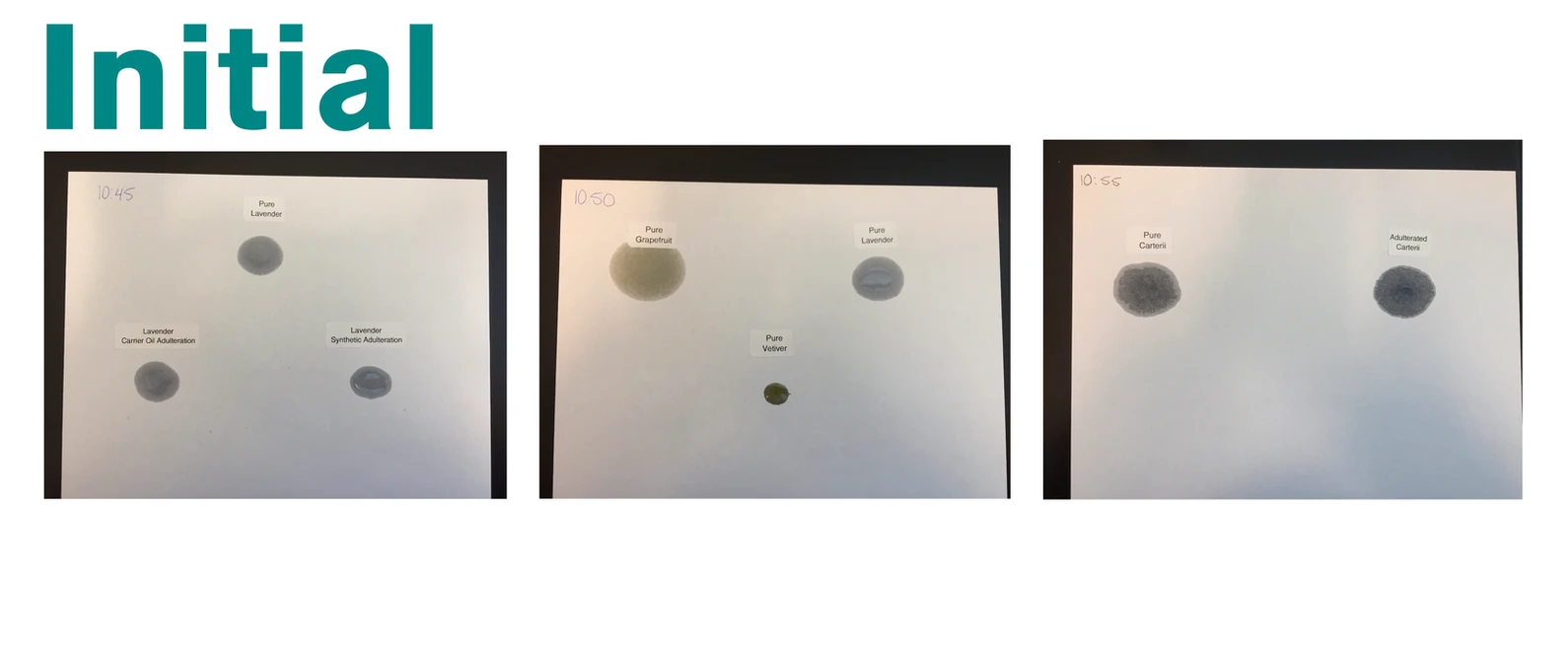
We performed a simple test in our lab to illustrate this. On the first sheet of paper, we put three different lavender samples at 10:45 a.m. The first was a pure lavender. On the bottom left, we put the same lavender mixed with 10% carrier oil. On the bottom right, we put a lavender sample that contained synthetic linalyl acetate and limonene.
On the next paper, we placed three different oils at 10:50 a.m.: grapefruit, lavender, and vetiver. As mentioned previously, vetiver is a heavier, thicker oil which will not fully evaporate. Grapefruit is a citrus oil, which typically evaporates faster than lavender.
Finally, we did a paper test with pure Boswellia carterii (frankincense) and a Boswellia carterii adulterated with a different species of frankincense at 10:55 a.m. Since the oil is mixed with a different, yet still pure, species, it can still evaporate.
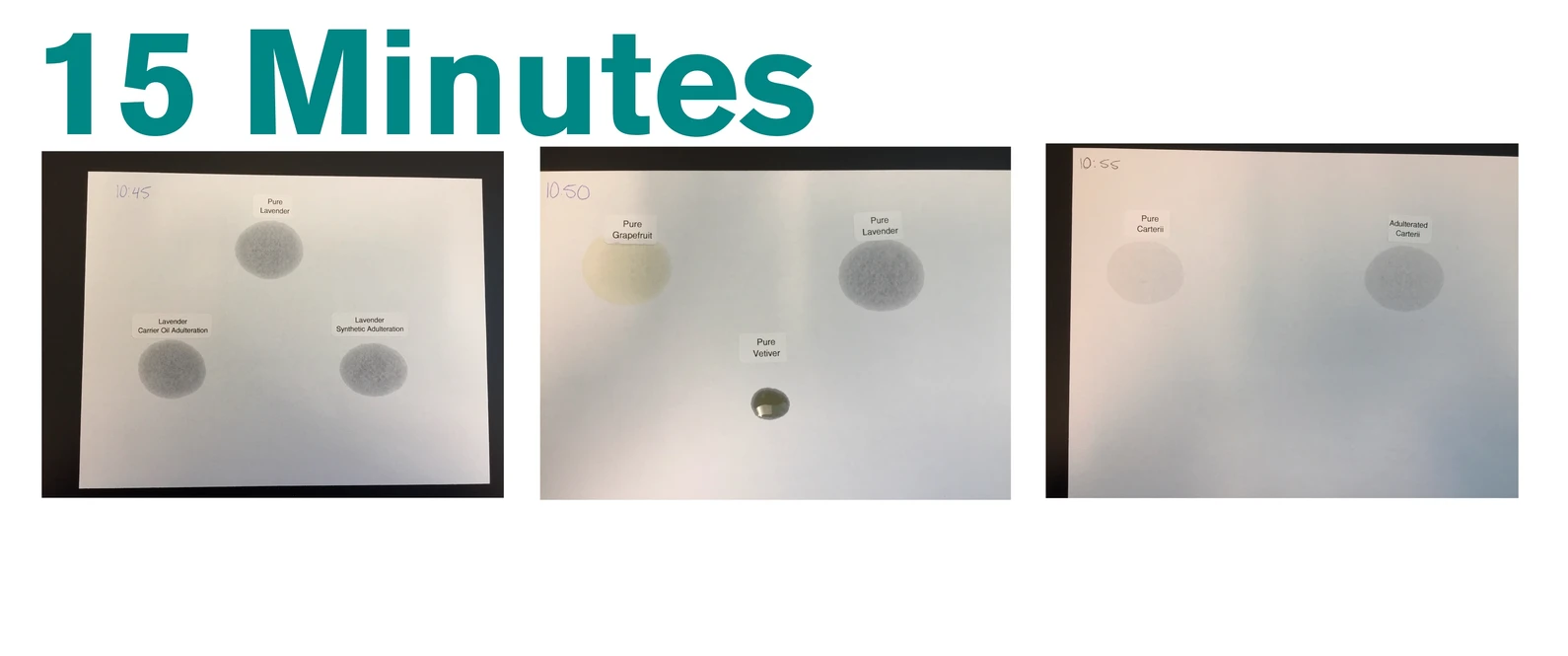
We checked each paper after 15 minutes.
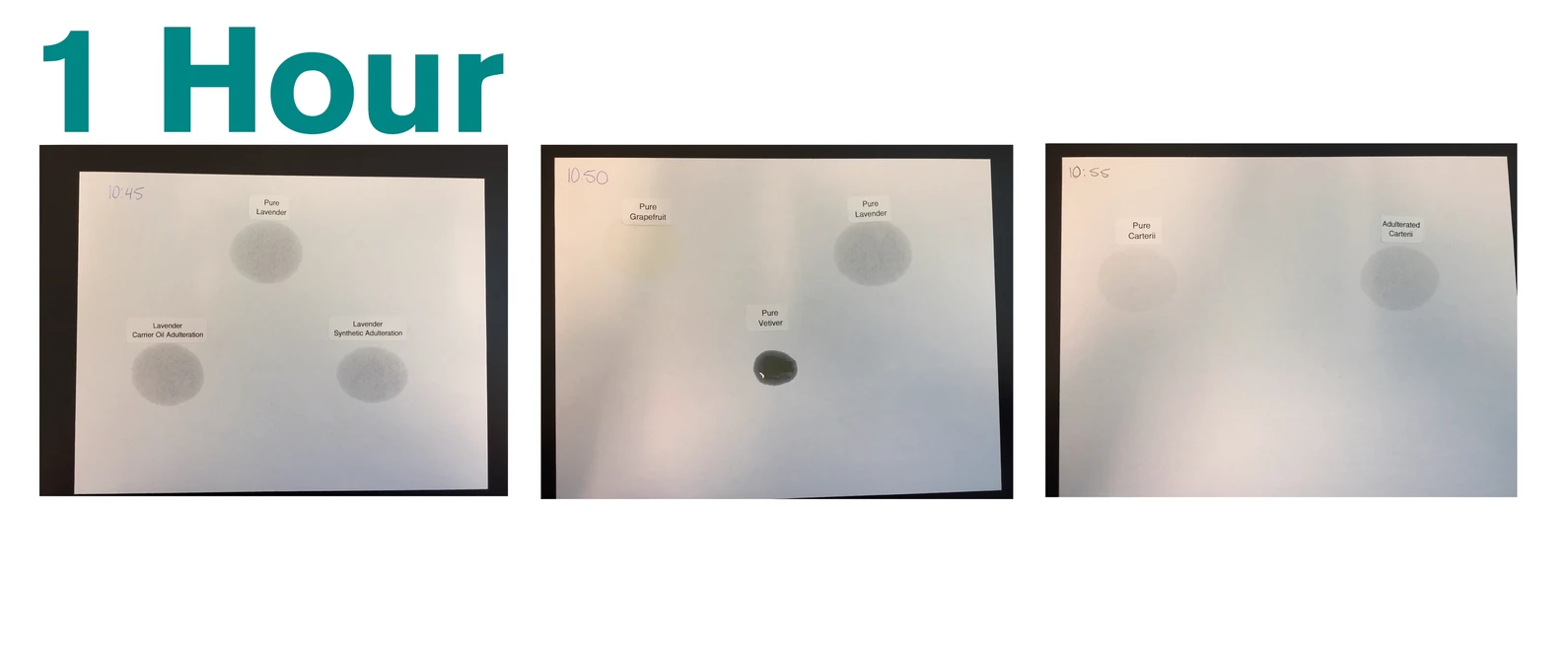
After a full hour, we checked again. The lavender showed little difference. On the second page, the grapefruit had evaporated considerably, while the lavender looked the same and the vetiver had barely soaked through the paper. The multiple-species frankincense had not evaporated as much as the pure sample, which may be attributed to the evaporation rate of the secondary species mixed in.
After two hours, the pure lavender and the synthetically adulterated lavender had evaporated more, however the lavender mixed with 10% carrier oil looked the same. On the next page, the grapefruit had nearly completely evaporated except for some residual orange color. The lavender had evaporated more, and the vetiver still had a pool of oil that had not soaked through the paper. The frankincense paper showed that the pure carterii had evaporated significantly more than the mixed carterii.
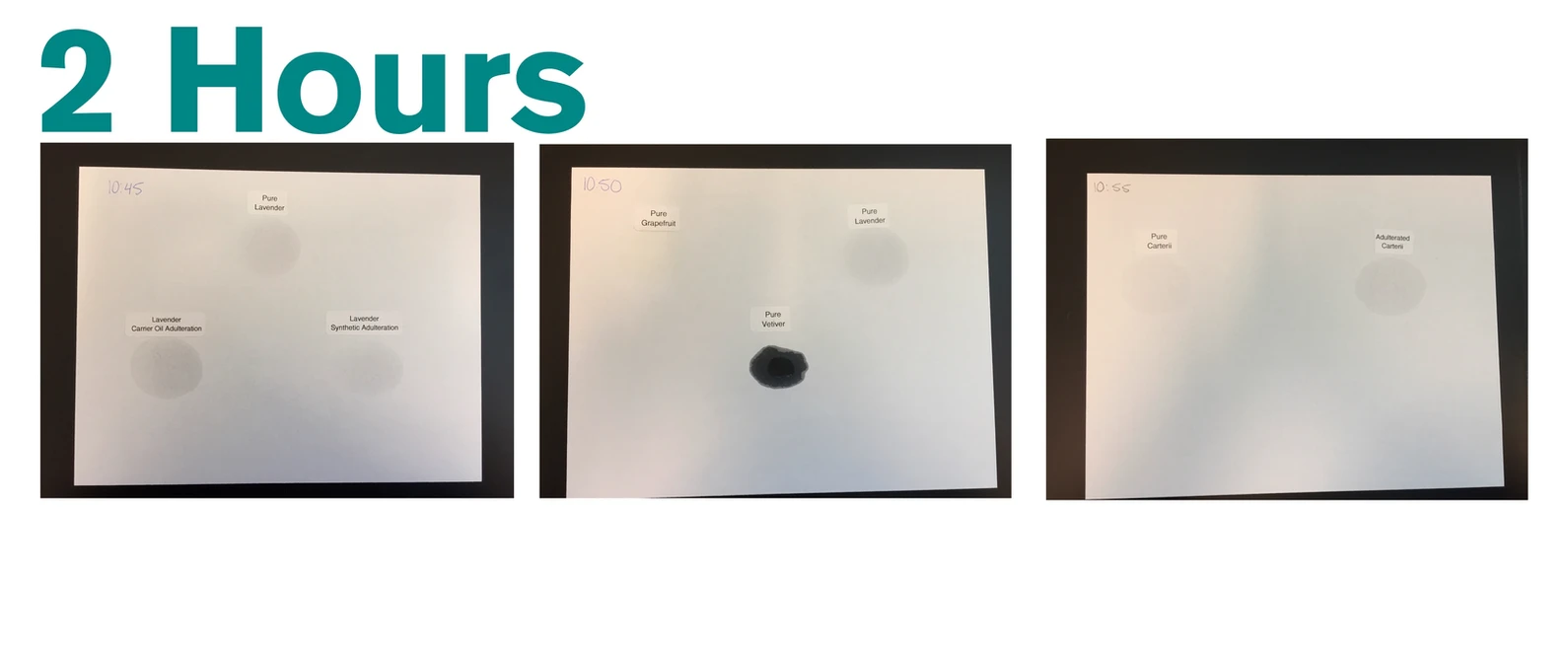
At the third hour, the pure lavender had almost completely evaporated and the synthetically adulterated lavender was close behind with just a little more of a mark than the pure lavender. The lavender with carrier oil was still prominent. On the second page, the grapefruit still had a bit of a tint but was still nearly evaporated completely. The lavender was also close to being completely evaporated. There was still a small drop of vetiver which had not soaked through the page. The pure carterii had nearly evaporated and the mixed species sample had evaporated more, but was still far from being evaporated completely.
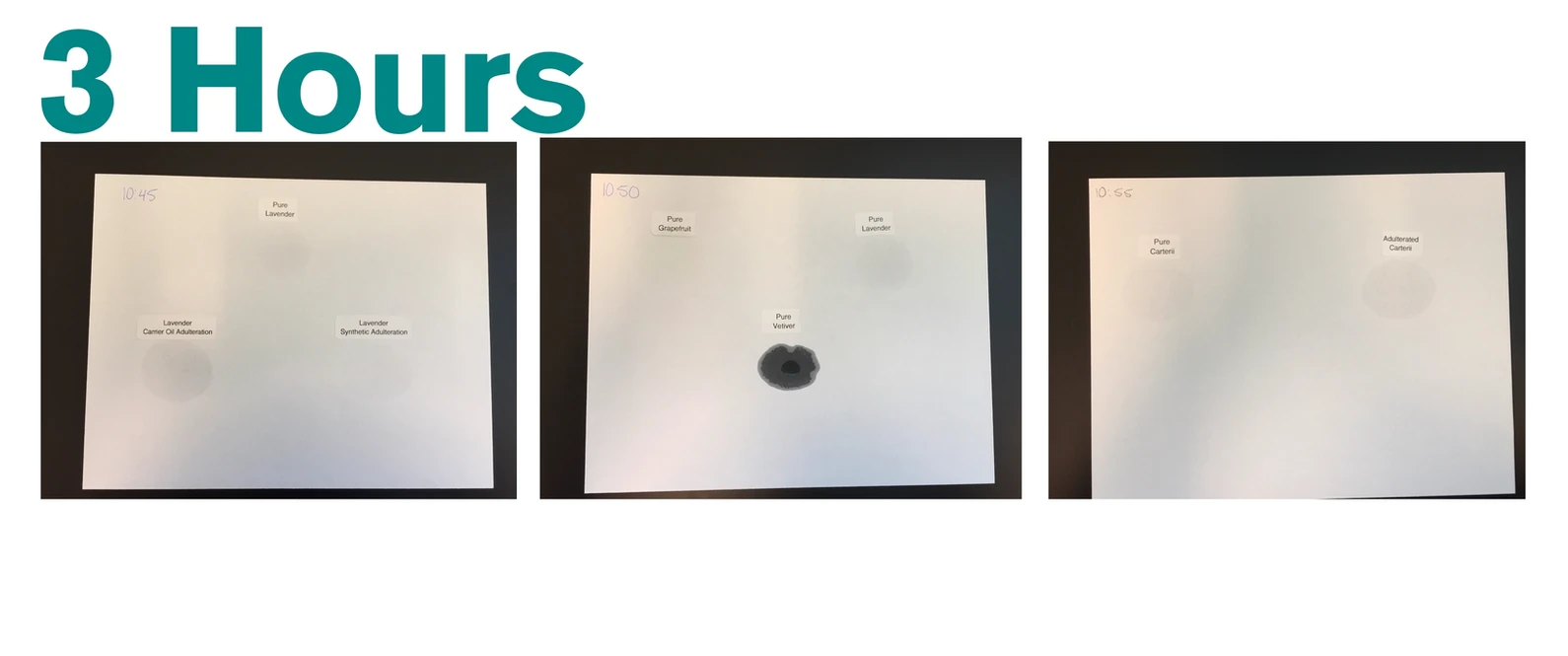
After five hours, the pure lavender was nearly indistinguishable from the paper and the lavender with synthetic adulteration was almost completely evaporated. The lavender with carrier oil was still present, as expected. On the next page, the grapefruit was visible only by a slightly discolored spot, but it was almost gone. The pure lavender was nearly invisible unless looked at closely. The vetiver had finally soaked through the page, but was still very viscous. On the final page, the pure carterii was almost completely evaporated and the mixed sample had evaporated more.
After 24 hours, only the lavender mixed with 10% coconut oil was visible on the first page. On the second page, you could still see a slight orange tint from the grapefruit, but it was very faint. The vetiver was still very present at the bottom, as expected. On the last page, the pure carterii was completely gone and the adulterated carterii was almost completely gone.
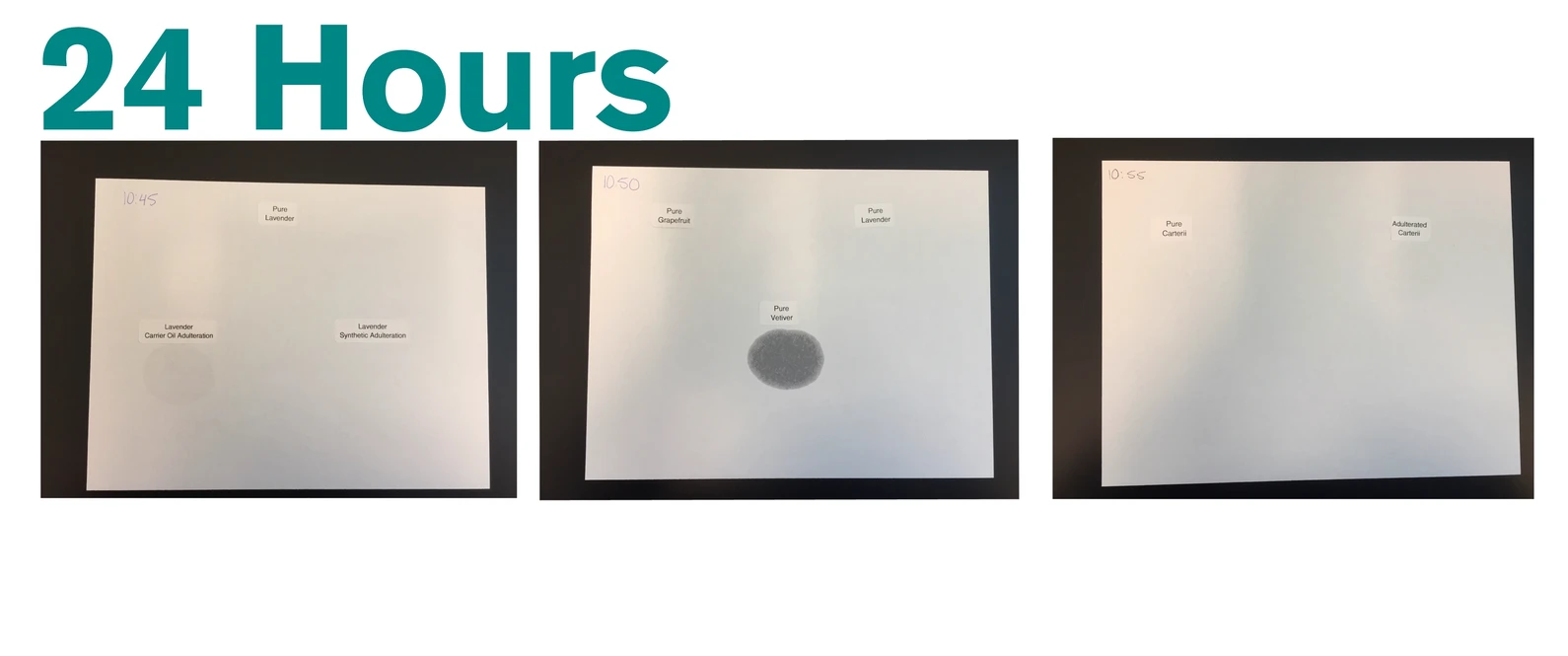
As you can see, the paper test is only effective for a select type of adulteration. Given that it took several hours for the lavender to evaporate while the grapefruit evaporated faster, the paper test is also time-intensive and requires patience. Testing essential oils is important to ensure purity because at-home tests cannot account for the chemical adulterations that happen so often in the industry.