The LC-MS: How We Test for Pesticides
Apr 5, 2021 📙 2 min readOne of the routine tests we run at APRC uses LC-MS (Liquid Chromatography–Mass Spectrometry) to screen for pesticides. Our board member, Dr. Dosoky, developed a method specifically designed to detect pesticides in essential oils.
During a pesticides run, the LC pumps two mobile phases through the system while the sequence is controlled by the instrument software. The computer then initiates the injection of the sample.
The autosampler in Tower 2 pulls a 1 µL (microliter) aliquot from the sample vial and introduces it into the mixed mobile phase. The flow carries the sample through the tubing to Tower 1, where the column oven is located. The oven holds multiple columns (six total), and the biphenyl column is used for our pesticide method because it provides effective separation for the target analytes.
After separation, the sample moves into the MS source. In the source, the sample is guided through a capillary (a needle-sized opening) and sprayed. Heat helps convert the stream to gas-phase ions, which then pass through the interface—approximately 350°C (662°F)—and into the MS chambers for analysis.
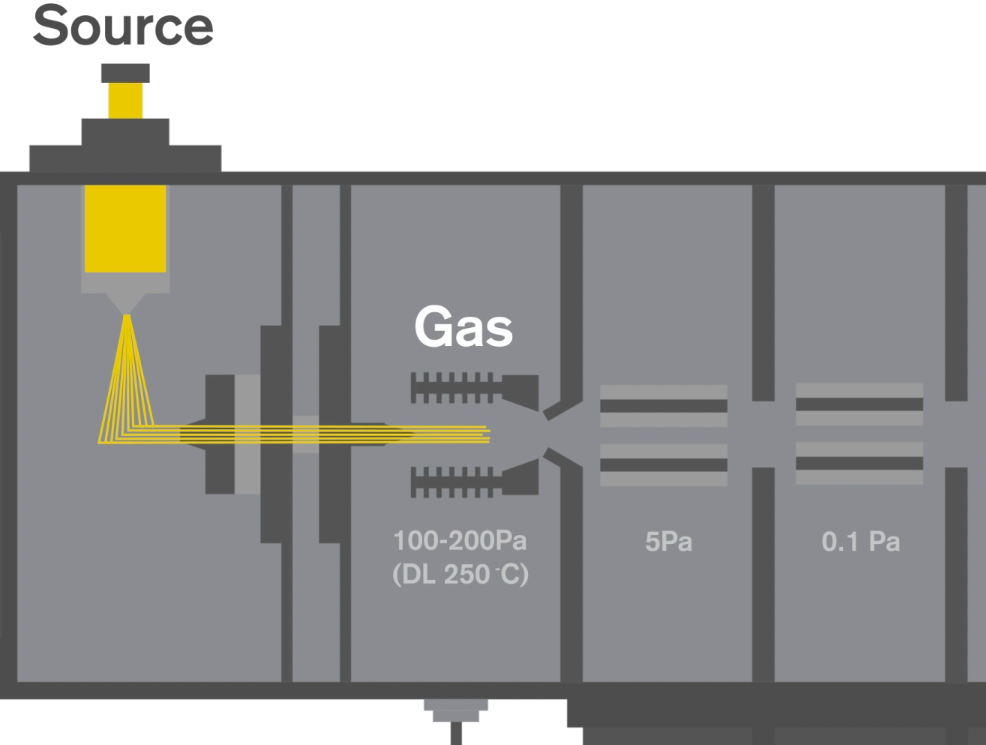
In Q1 (Quadrupole 1), the instrument isolates a specific, preselected parent ion (for example, a pesticide molecule, if present). In Q2 (the collision cell), that parent ion is fragmented using controlled energy to generate daughter ions. Q3 then filters and detects the daughter ions. This “parent → daughter” transition is what confirms the identity of a target compound.
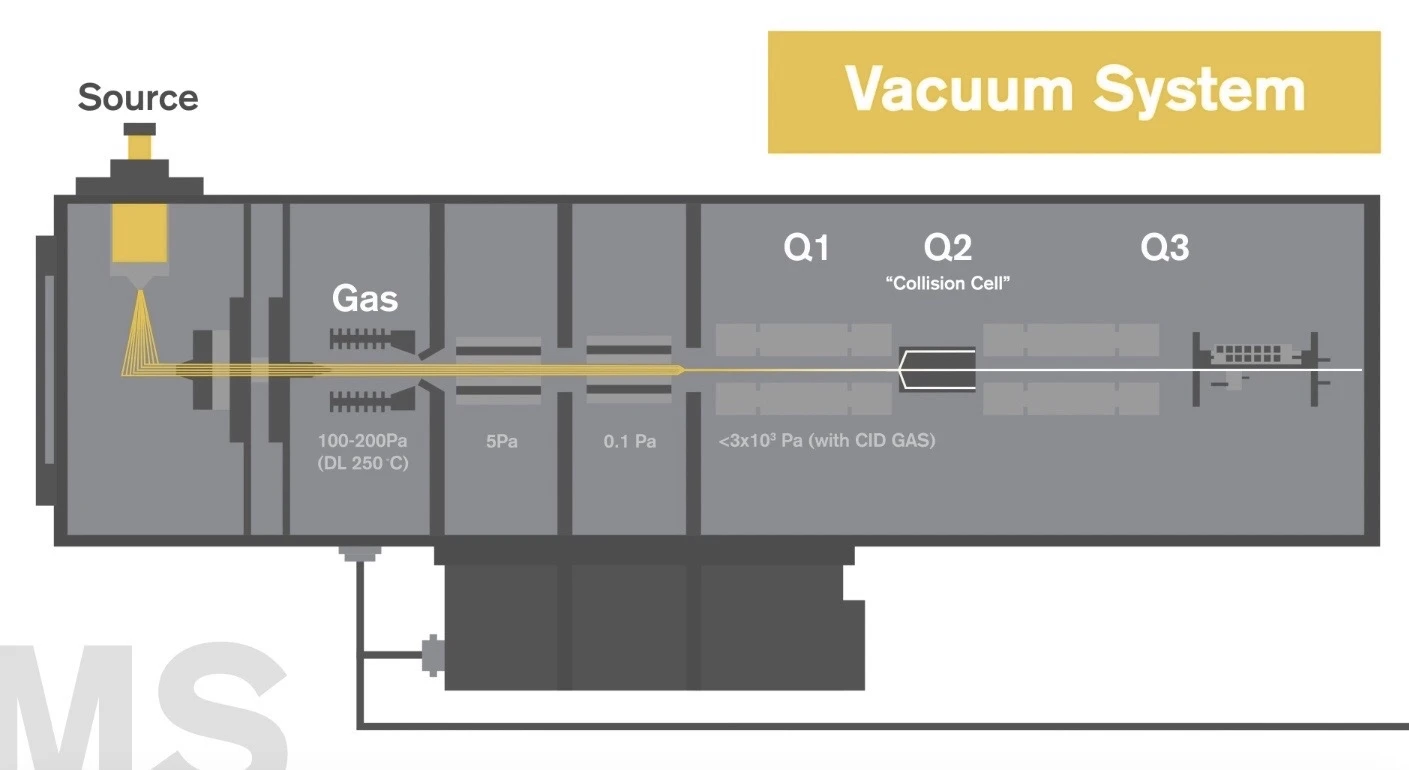
The parent mass and the expected daughter mass are predetermined and entered into the method. For example, if a parent ion has a mass of 142, a specific fragment might consistently appear at 93. When the instrument detects the expected daughter ion at the expected time, the method flags that pesticide as present. If the expected transition is not detected, the system does not report that pesticide for the sample.
You can watch our LC-MS video on our YouTube channel here.