Lemon Verbena Adulteration
May 10, 2024 📙 1 min read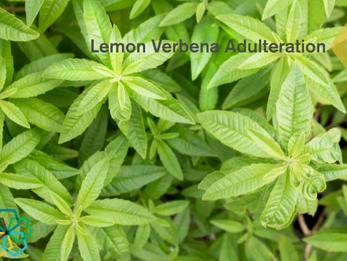
Lemon verbena is a relatively rare oil with several readily available “look-alike” components, which can increase its risk of adulteration. It may be diluted with non-volatile oils, extended with synthetic materials (for example, synthetic citral), blended with synthetic fragrances, or cut with similar oils such as lemongrass, litsea cubeba, or Spanish verbena.
Lemon verbena is also notable for having multiple chemotypes. Chemotypes describe oils that come from the same botanical source but show different dominant chemical profiles. In some essential oils, several chemotypes occur naturally, and they’re differentiated by the relative percentages of key constituents.
For example, Ho Leaf is commonly described by three main chemotypes (camphor, cineole, and linalool). In the camphor type, camphor may be present at 42.0–84.1%. In the cineole type, 1,8-cineole may be present at 56.7–63.7%. In the linalool type, linalool may be present at 66.7–90.6%.
In lemon verbena, the commonly referenced chemotypes include sabinene, limonene, thujone, and citral. Because chemotypes can look very different on an analytical report, adulteration attempts are often tailored to “match” the expected profile. For instance, to imitate a citral chemotype, adulterers may try to target constituent ranges where geranial is near 30% and neral is near 23%. In a sabinene chemotype, those same constituents may be closer to ~10% each.
These chemotype differences can influence the oil’s aroma, performance, and potential biological activity. Lab testing is important in all cases, but when multiple chemotypes exist, it becomes even more essential to confirm authenticity and interpret results correctly.